Saturday, July 31, 2021

Kansas City

Got up early yesterday (Friday, 7/30), picked up Joe, our VFW Post commander, at 0445 and headed for SeaTac to start our trip to the National VFW Convention.

The convention was originally booked in Baltimore but, due to Covid protocol problems, was changed at the last minute. Now we're having a "business only" convention in Kansas City. "Business only" means we will be having our regular convention business meetings without the usual health fair, commercial vendor displays and other extraneous features.

While we were waiting for our flight, I saw this 747 roll by. I guess there are a few passenger models still flying, but many of them have been reconfigured as freighters.

The wind was blowing from the north so during climbout I got a shot of Puget Sound and West Seattle.

Our flight to MCI was uneventful but I must say that the signage in their new airport leaves a lot to be desired. Normally, when you exit the skybridge at the gate you see a sign that directs pax to baggage, connecting flights, etc. In this airport we didn't see a sign until I finally spotted a woman across the concourse waving her arms and pointing up at a small sign reading, "baggage claim." After we out that door and into an adjoining hallway, we followed the small sign that pointed to the right. That led us to a sparsely populated area that didn't look like an approach to the baggage area. Turning around, I saw a sign, "Baggage Claim" pointing back the way we had come. 

Finally claiming our bags, we hopped a Lyft and got to the hotel. After settling in Joe was thirsty so we got directions from a lobby clerk and walked down the street in 93 degree weather that felt like 107 (according to the weather app) to an Irish pub a couple blocks away. 


We stepped into The Dubliner and welcomed the cool breeze from the A/C after the hot humid walk from the hotel. 

Joe ordered a stout and I ordered a non-alcoholic draft. That was a "No" so tried a bottled version. That was also a nonstarter so I had to be content with my ice water. I should mention that Joe is an Irishman and must have kissed the Blarney Stone several times since he has the "gift of gab" as they call it.

Last night we went to dinner at a Brazilian Steakhouse, Fogo de Chao, where I could enjoy a great vegetarian spread from their extensive salad bar. 

Today we start the meetings and other business so off to work I go.

Monday, June 7, 2021

Kula Botanical Garden


Kula Botanical Garden is situated up the hill from us at about 3500 feet above sea. It's only about a twenty-minute drive but we gained a couple thousand feet of elevation during that short drive. 

We paid our $10 (each) entry fee and went in a little after nine this morning. When we got there, Ikuko and I were the only ones enjoying the clean air and majestic views. We had the trails to ourselves and when we left a couple hours later, there were only three other cars in the lot. 

During our visit, we viewed plants from all over the world. The garden was established in 1968 so many of the plants and trees are fully mature. There were so many interesting/different/strange plants that I couldn't take photos of all of them. So what you see is what caught my eye.

This is the walking map at the front desk. We were encouraged to take a pic so we could refer to it as we walked up the path, exploring on the left side, and as we descended, again exploring on our left side.
Irises after the morning watering.

A giant Pincushion (Protea)

Dragon Trees from the Canary Islands

A Bromeliad path
Safari Sunset from New Zealand

Kangaroo's Paw from Australia

Fortnight Lily

This giant Asparagus Fern looked like an octopus or giant squid as we came around the corner and eased away from its tentacles.
Spanish Bayonet Yucca. I guessed they were about 15-18 feet tall.

These Hawaiian natives are visible on the distant side of the ravine. At least their marking signs were visible. I think this is a good way to conserve the plants while still allowing a sense of discovery. 

Guardians of the Garden

Banksia Ericafolia (No common name given) reminds me of the pruned and nurtured pines in some Japanese gardens.
Orchids line one side of the orchid house

More orchids on the other side

If you look carefully you can see the stream peeping through the lush vegetation.


This is a Pot of Gold flower, part of a hedge that runs around the parking lot of the Garden. From here we can see the isthmus that bridges the low country between the Haleakala volcanic buildup and the West Maui Mountains, which we see in the center-right background. If you follow the bottom of the cloud layer to the right, just where it meets the bush in the right side of the photo, is where the Iao Valley lies. I posted photos from when we were there a couple days ago.


Sunday, June 6, 2021

Maui Flora

 Where we are staying, at the end of a short dead-end street, many of the houses have flowers in their yards. In the mornings the hibiscus are in full glory, but in the late afternoon, they curl up and sleep until next morning. Along our street there are hibiscus hedges and individual bushes, some ten or twelve feet high. 


Some of the other flowers are these pics from the street but mostly from Dean's yard.
Flame of the Woods
Brazilian Jasmine
This Flamevine hedge is on two sides of a house near the main road. When I first saw it I thought it was honeysuckle, but there's no aroma. Looked it up to find it is called Flamevine.
Papaya flowers near the top of the tree with young fruits below.
A Bougainvillea hedge borders the small road along one property. I see several colors of Bougainvillea as we drive around town.
A Pincushion Protea
One house has a hedge of Bird of Paradise plants.
Ikuko and I standing on the footpath bridge over the Iao River with Iao Needle in the background. A stiff breeze was blowing up the valley, as you can see by Ikuko's hair trailing out behind her. Mine didn't blow so much. 

The footpath winds up through Iao State Park with side trails here and there that wander down by the river. Behind the bush over my right shoulder is the lookout at the end of the trail. I went up there by myself, navigating the 135 steps and admiring the scenery.

The following is from the Hawaii-Guide website and describes the valley better than I could.

Nestled in the lush greenery of the 'Iao Valley is the natural rock formation called the 'Iao Needle. The green-covered stone protruding from the valley floor is actually an old basaltic core (volcano remnant). The 'Iao Needle is 2,250 feet above sea level, or 1200 feet tall from the valley floor. 

The traditional name is Kuka`emoku and it's known as the phallic stone of Kanaloa (Hawaiian god of the ocean); thus the 'Iao Needle was once used as a natural altar. The name 'Iao is pronounced "EE-ow." The 'Iao Needle is surrounded by a very lovely walkway and garden of lush tropical plants. Surrounded on all sides by the Pu'u Kukui Crater, it was the site of one of the most famous battles in Hawaiian history. 

In 1790 King Kamehameha I defeated the Maui army in his quest to unite the Hawaiian Islands. It is said that when the battle was over, the stream was so damned with all the bodies that the water ran red with blood. The site was named Kepaniwai "damming of the waters." Nearby in the valley, you'll find the Kepaniwai Heritage Gardens. Take Highway 32 (Kaahumanu Road) west out of Wailuku. This road turns into Highway 320 which leads directly to the 'Iao Valley State Park. Those looking to enjoy the scenic park must follow social distancing measures and wear protective face masks for the duration of their visit.

Tuesday, June 1, 2021

Maui Upcountry

Dean and Katrina live in Pukalani but have a Makawao postal address. This area is in what is called Maui Upcountry where there are many ranches and farms. Elevation of their house is a little over 1600 feet. Pukalani means "Window of Heaven" in Hawaiian and Makawao means "Eye of the Forest." Elevations throughout Upcountry (depending on who you ask) range from around 1000 to over 3000 feet.

The higher elevation means that more fruit trees and vegetables grow well here. In their yard there are some old, established trees along with some newer ones that Dean has recently planted.

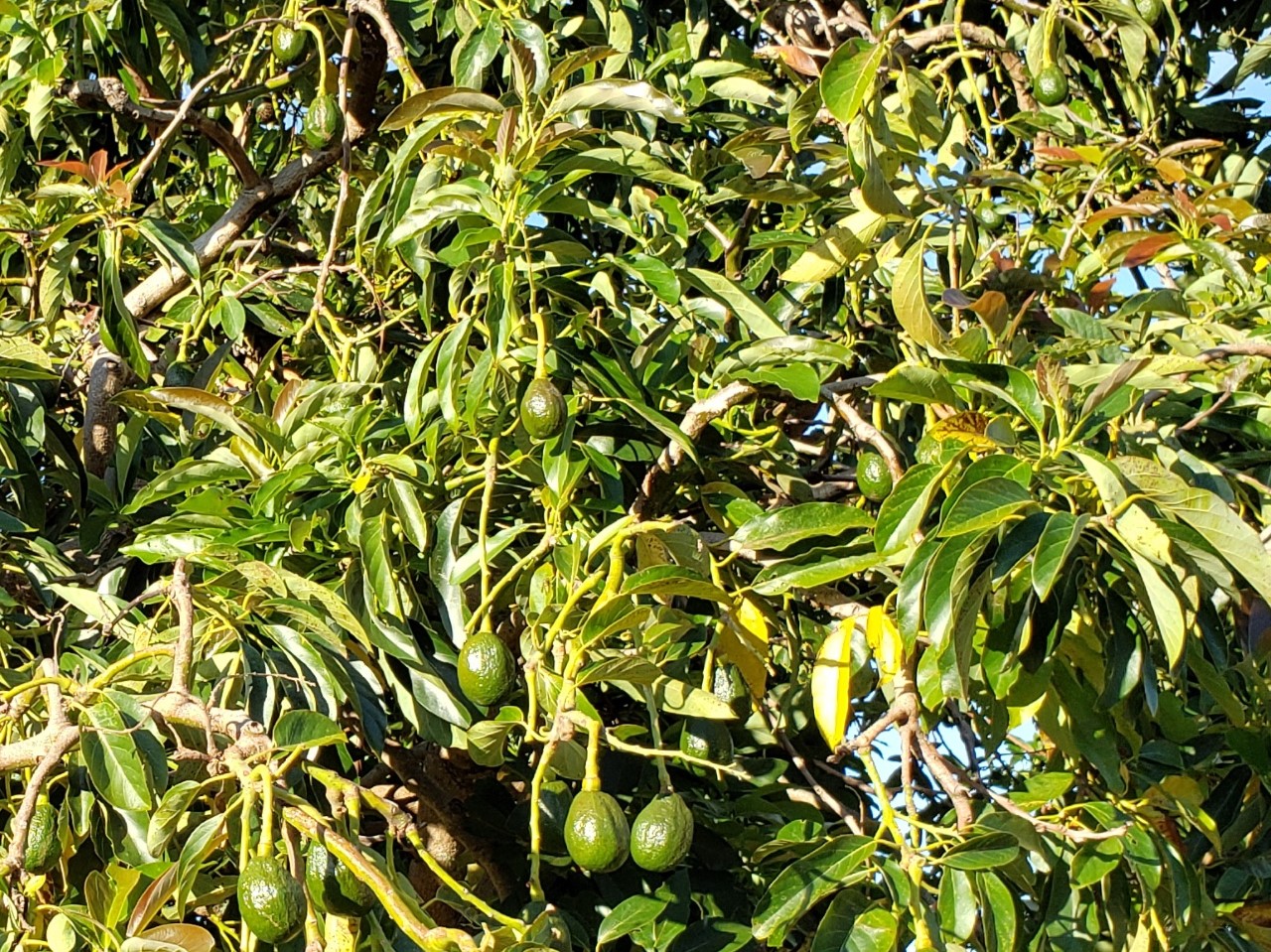
Here's a pic of their avocado tree. The fruits will start to ripen later in the summer and are reputed to be the best in the area. As with many fruits and vegetables, there are many varieties of avocado that are very tasty but don't make it to our stores. Here's a link to a guide to the fifty most popular varieties, if you're interested:  https://www.finedininglovers.com/article/how-many-avocado-varieties-do-you-know-here-are-over-50

These avocadoes will be ready to pick beginning in October.
Their Macadamia tree is another well-established tree.  

The tree is loaded with growing nuts that will mature later in the year. What you see is the outer husk. When the nuts are almost ripe they fall from the tree, finish ripening and then the husk splits, leaving the hard-shelled nut. 

Here's one type of Macadamia nut cracker. The base is a piece of heavy hardwood holding a heavy steel plate and there is a hole to hold the handle part when it's not being used. The handle is another heavy piece of hardwood with a hard rubber holder for the nut and a specially shaped piece of heavy wire that extends from the base of the rubber, through the handle and pops up when the nut is inserted. To use, you insert the nut, strike it forcefully on the steel plate, eject the cracked (hopefully) nut and separate the cracked shell from the nut. In this photo you see uncracked nuts at top, nuts in their husks in the middle and the cracked nuts at bottom. There is one nut in the rubber holder ready to be cracked. As you can see, the holder is partially split so it can hold various sized nuts.
A new banana tree setting its first bunch of fruit.
Dean planted these trees about a year ago. They are Apple Bananas, a popular variety here in Maui Upcountry. They are shorter than the typical bananas we get in supermarkets on the Mainland, but they are rich and sweet. 
There were a couple of papayas on the property when they bought it. These are new trees he planted and are bearing fruit already. 

A lemon tree doing its thing. The blocks around the base keep away the wild chickens who love to scratch in the fresh dirt around his plantings.
I haven't tried to count the chickens that come through their yard but there must be four or five roosters and twice as many hens. I've seen hens with 10 young chicks but as the chicks grow, natural attrition takes some so hens with larger chicks still following her have families of one to four or five chicks, the rest being lost to predation, accident and neglect.
Papayas in the foreground, next bananas with the Macadamia tree in the background.
Tomatoes grow well here. These are very tasty.

Couldn't resist taking a shot of the waning gibbous moon through the papaya.

These fruits are, in the bowl, ripe apple bananas, green bananas, two local grapefruits from the farmer's market and a lemon from Dean's tree. On the right are two varieties of avocado from the farmer's market and a couple of limes that the fisherman gave us when we bought a small (20#) Ahi tuna yesterday at a pop-up roadside stand. The tuna was freshly caught so we had sashimi and spicy tuna temaki for dinner last night.

Temperatures this time of year, in this area, run in the low sixties to the mid-eighties, although the current temperature right here is 89 degrees at 1320. Today is an unusually warm day for this time of year because there is little wind and warm sun. I must say it feels good in my arthritic joints. 

Tomorrow I'll post some of the local flowers.


Sunday, May 30, 2021

Traveling Again

 After more than a year staying close to home, Iko and I finally headed to the airport for some real travel.

At 1400 on Thursday (5/26) afternoon we set off for SeaTac airport, destination, Maui, to visit our younger son, Dean, and his wife Katrina. We were both fully vaccinated and had received negative test results so had hopes of an uneventful trip.

Hawaii is doing a delicate balancing act by encouraging tourists critical to their tourism economy all the while trying to reduce the odds of importing new virus cases. To meet their requirements, we registered with Hawaii's Safe Travel site and completed the health form. After Honolulu, Maui has the most tourists so they have additional guidance, including downloading an app that alerts if  the bearer has been near someone who tests positive.

Three days before departure we were tested by Carbon Health (one of the few providers partnered with Hawaii) for one of the two tests authorized by Hawaii. Tests cost $170 each and are not covered by insurance. Our results, and the needed QR code, posted 24 hours later on the Carbon website. I downloaded and printed those for future use, then uploaded the QR codes to the Hawaii Safe Travel Site. 

Having jumped through the preliminary hoops, we felt prepared to plunge back into travel so headed to SeaTac allowing plenty of time for unforeseen delays. Part of that cushion was used right after we left Edmonds. Traffic from Northgate to downtown Seattle was taking 40 minutes so I hopped over to Hwy 99 and went through the new tunnel and out to the airport that way. Got parked and into the terminal just a little over two hours before flight time.

 Checked baggage and made our way to the special Hawaii Clearance desk. Here is where prior knowledge paid off. We produced passports, vaccination records, Hawaii Safe Travel QR code and those critical QR codes from the pre-travel negative Covid testing. This stop took about ten minutes but the result was a serial-numbered white wristband for each of us.

The flight to Maui was uneventful and, thanks to that wristband, clearance through Maui airport was uneventful too. Seeing the wristband and that I had my passports, downloaded exposure app, vaccination records and printed QR codes in hand, one of the guards at the exit from the screening room beckoned us forward, didn't even look at our documents, and directed us right on down the passageway toward baggage claim. 

I estimated that more than 50% of the passengers on our flight didn't have wristbands. They were stuck in the screening area doing paperwork and getting Covid tests. According to the Maui travel info site, most would be required to self-quarantine for two weeks or the duration of their stay if shorter. I'm not sure how long it took for those poor souls but most looked disheartened as they saw the wristband wearers breeze right on through. 

The kids picked us up at the airport and we were relieved to have cleared the hurdles and to be free from the self-quarantine facing others. 

During this time of year, Hawaii time is three hours behind PDT. We claimed our baggage a little after 2200 local time, so it was a long day for a couple of old-timers.

More tomorrow from Maui.

Tuesday, March 23, 2021

Springtime and Moons

The first day of spring here in the northern hemisphere was last Saturday. We are having our typical springtime weather, so I didn't dare walk too far Saturday or Sunday because of the intermittent rain showers marching through our town. Yesterday was more of the same, but I decided to take my chances so grabbed the trusty walking umbrella that served so well when I was trekking the Himalayas a couple years ago and set off.


If interested you can read about the trek to Everest Base Camp in posts to this blog in May and June 2018. Here's a link to the first part of that trek:  https://hrodenbergersblog.blogspot.com/search?updated-max=2018-05-20T01:36:00-07:00&max-results=20&start=15&by-date=false

In order to find that link I had to scroll back through several posts and got sidetracked looking at the old photos. Reminiscing is fun, but back to today. Thought I would need the umbrella right away because of a light drizzle, but it soon stopped and the umbrella stayed wrapped despite the ominous clouds that glowered at times. 

Out walking there were signs of spring everywhere. The blackberry brambles were sprouting new leaves and the Scotch broom was eagerly opening early flowers.


Wild currant was blooming profusely, much to the delight of the hummingbirds.

Salmonberry flowers showing their colors and also feeding hummingbirds. 

There were several boisterous clumps of Oregon Grape flowers but I didn't see any hummers around them. Maybe they aren't yet open enough.

Edmonds features corner gardens at the ends of downtown blocks. They don't take up much room, serve to enforce the corner "no parking" areas, and give some welcome beauty to drab concrete corners. Although they are maintained by city workers, they are supported by citizens paying a fee for a small sponsorship sign in each garden. The sign usually memorializes relatives or other significant people.

In honor of the advent of spring, I replaced my 2' x 3' winter flag with the 3' x 5' flag that flies from our balcony during warmer weather. 

What about the moons, you ask. Well, this spring we are privileged to have three "super" full Moons in a row. Next month we have the Pink Full Moon on the 27th. "Super" because it will be only 222,212 miles away from Earth. Next comes the super Flower Moon on May 26th at 222,117 miles away. The super Strawberry Moon on June 24th barely sneaks into the "super" category at 224,662 Miles. 

It seems as if super Moons have been around since I was young, but that's not the case. Astronomer Richard Nolle came up with the idea of super Moons in 1979. He decided that any Moon, full or new, would be "super" if it were at least 90% of the way to the perigee (closest point to Earth) of its orbit. That point translates to about 224,791 miles from Earth to Moon. Incidentally, such distances are measured center to center of the bodies concerned. 

Or, maybe we'll have only two super Moons. It seems there is no official definition of such a Moon, so different authorities use different standards. I'm using the original Nolle definition, but Sky and Telescope uses 223,000 miles, and Timeanddate.com uses 360,000 kilometers (223,694 miles). According to these two, the Strawberry Moon in June doesn't quite make it. Maybe someday there will be an official distance. Meanwhile, I'll just admire the super Moons, no matter how they are measured.

There are also super new Moons. Of course, we can't see those so I won't spend time on them. I say we can't see them but occasionally a new Moon, even though we can't see it, will give us a solar eclipse. That's a good example of a syzygy, when three or more bodies are lined up in a gravitational system. It isn't often I get to use that funny word, so had to take advantage of the opportunity. ;-)

In addition to super Moons, there are Blue Moons, which I'm sure you all know as either two full Moons in a month or four full Moons in an astronomical season, i.e., the three months between a solstice and equinox or vice versa. Then there is the Black Moon, which sometimes happens in February when there is no full Moon at all, or when there are two new Moons in the same month or Astronomical Season.

So there you have it. I need to stop before I become a lunatic or go loony, or get moonstruck.

One more item of interest. Here on the West Coast, we'll be able to see a lunar eclipse of the June Strawberry Moon. That is if the clouds stay away.