Showing posts with label Seattle. Show all posts

Saturday, April 29, 2017

Ole Mossy Rock


Seattle is known for being a wet city. Not wet as in alcohol, although there's plenty of that too, but wet as in rain.

As of the evening of April 25th, Seattle had 44.7 inches of rain between October and up until then in April. As the headlines announced, we smashed the record set just last year for the most rain in the October-April period. Of course, because we are such a young city, we've only been keeping such records since 1895. But two sequential years breaking the rainfall record? What's up with that?
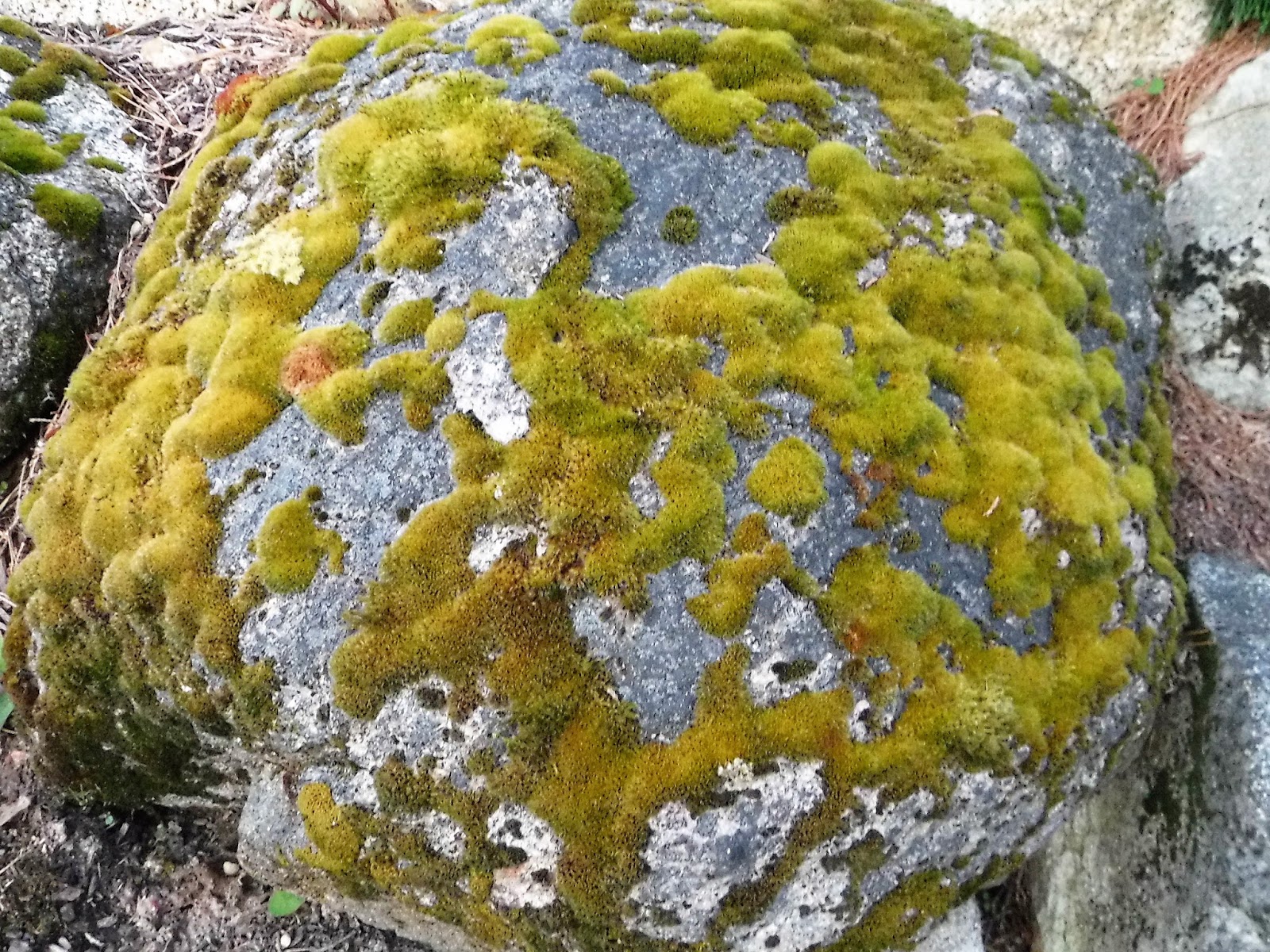
When Kuro and I went walking a couple nights ago, we decided to look for moss, one of the natural results of the rain. We found moss in plenty and of various kinds. Moss on rocks, sidewalks, tree limbs and roofs.
Moss growing on a small shed roof just across our back fence.
We found many varieties of the four kinds of moss: sheet moss, cushion moss, haircap moss and rockcap moss. I don't know how many varieties there are in each division but the articles in Wikipedia and other places go on seemingly forever.

Here in Seattle many people battle the moss. They fight the moss in the lawn, on the sidewalk and on the roof. They put up a good fight but the moss always wins. Some people don't fight but seem to enjoy the moss that grows everywhere.

Moss is called "koke" in Japanese and is admired instead of despised. Most people who grow bonsai encourage moss to grow in various ways over and around the roots, and temple gardens sometimes have glorious expanses of various kinds of koke.

We sometimes walk this way just to admire this huge old wisteria vine that stretches along the top of a fence from property line to property line, probably fifty feet. I don't know how old it is but it is covered with beautiful moss now and it will soon bear blossoms from here to the end of the fence.


I've walked these same streets for many years, both with our old Kuro and now this new dog, Kuro, and I've looked at flowers, trees and sunsets. I've looked at moss before but I've never searched it out and really seen it. It's everywhere.

As Henry David Thoreau said, "It's not what you look at that matters, it's what you see."
Moss gets along well with our wild violets that, like moss, grow in the shady moist places, if left alone.

Three or four different kinds of moss plus some lichens thrown in for a bonus.
Speaking of lichen, the micro-climate on this north side of an old fence grows a bumper crop. Several kinds fighting for space plus a couple kinds of moss find breathing room.


Moss, moss, everywhere, if you really see what you are looking at.
Moss and lichen grow on the larger branches of my nashii (Japanese pear-apple) tree.

The old saying goes, "A rolling stone gathers no moss." Stationary stones and old tree branches allow moss to grow undisturbed. Shiny growth wears a badge of new life. No moss here until the new leaves join previous generations in the humus below.

As I get older I find it necessary to roll a little harder to keep the moss from growing.


Wednesday, March 15, 2017

Exercising This Old Body


When I was young, sleep was unbroken, food was fuel and exercise was easy. Time was light on my hands, I expected to live forever and my body almost maintained itself.

Now I’m older and I find myself making nighttime trips once or twice or even thrice to the bathroom. Food serves not only as fuel, it easily turns to ballast. Life seems shorter than I expected and the end just around the corner.

For the subject of this post, I can only speak for myself, with the occasional observation about others. If you can identify with some of these thoughts, fine. If not, I don’t blame you, no one likes to dwell on a difficult side of life.

Maintaining fitness is an endless job, especially as I’ve aged. The older I get the harder it is to exercise and the harder it is to be fit, even if I exercise.

When I was young I enjoyed all kinds of exercise. I walked, I ran, I stomped on tin cans to crimp them around my shoes so I could clomp along feeling cool or run making a grand noise. I hammered together stilts from wood scraps and used sticks to roll barrel hoops. When I got tired of running I climbed trees to observe the world from a higher vantage point and when I ate supper I cleaned my plate and asked for more.

Incidentally, for those of you interested in taking up the art, it took a can with two good ends to make a decent shoe clomper. If one end had been cut out, as was usual, the can would flatten on that end so it wouldn’t do the job. Evaporated milk cans worked because they had small holes punched in one end. Also, in those days before aluminum cans, beer cans worked because the tops had only the openings made by the church key so the can would clamp nicely around a shoe.

Now I try to find ways to exercise that are fun but not too difficult or painful.

About nine years ago a new hybrid electronic game called Wii was introduced. At first I thought it was like the many other gimmicks advertised to magically take off weight, tone muscles and make its buyers handsome or beautiful, depending.

 The set consisted of a balance board, a small DVD player/game console and some hand-held wands with inertial sensors and pointer/clicker controls. The console was wired into the buyer’s own TV set and with that you were off and running, if you’ll pardon the expression.
I made a wooden support for my balance board so the feet wouldn't sink into our carpet.
 Compared to later gaming devices such as the X-Box and others with body-sensing capabilities, the Wii was pretty primitive. However, it was better than exercising alone so I tried out the various games and worked through many of the exercises and yoga poses. Finally I gave up playing the games but did manage to select a combination of eighteen yoga poses and exercises that I added to “my workout” and tried to do that workout every other day or so.
Almost ready to start the day's training session.
Like most things, the Wii had pros and cons. I liked the feedback from the balance board that helped me keep my body balanced and the positive reinforcement when I managed to do an exercise or yoga pose without falling over. "Nice balance," or "You've got great posture," made me try to repeat whatever it was that prompted that comment. On the other hand, I thought the wait between exercises was a too long and start-up time dragged out.

About four years ago I got another exercise motivator. A new little schnauzer came into our lives and he quickly learned how to get me away from the computer and out on the sidewalk every evening after dinner.
Being a cuddly little dog, Kuro fits inside my sweater on cold winter days keeping us both warm.


Walking with a dog is a pleasant way to exercise. I can walk as I like when we use the long retractable leash because Kuro keeps busy sniffing the bushes, ground and fire hydrants for evidence of other dogs passing his way. No matter my walking speed, he runs ahead, does his sniffing then runs to catch up and range out in front again.

When we use the short leash, Kuro knows he has to curtail his sniffing and keep close to me. He prefers the long leash but he’ll go with the short one if it means a walk.

At the beginning of last year I began using the Fitbit my son gave me for Christmas in 2015. It was a good little motivator also. If I was lacking some steps to hit the day's target I would walk a few extra blocks to make sure I hit the mark. It lasted about one year before the strap broke. Now I've gone to a Garmin fitness tracker. It's more sophisticated and accurate although so far it shows me descending more stairs than I ascend. The motivation level is about the same so I enjoy using the Garmin too. The sleep tracker, which shows times of light and deep sleep and time awake is a useful addition. 

The motion  detector/tracker which is worn on the wrist is synced with software which displays several different pages of stats on my phone. This is the display for last night's sleep.
The yellow circle shows total sleep, although it doesn't subtract waking
time. The sleep intensity bars near the bottom I find most useful.
Our treadmill is a last resort for me although Ikuko uses it almost every day; see the notes she uses to practice her shigin while walking up and down the treadmill hills. She has been attending shigin classes for many years and is skilled in the art but, as with any skill, she needs practice to maintain proficiency, so she combines pleasure with pleasure and sings while she walks. 

I use it when the weather discourages outside exercise. I’ve tried to teach Kuro how to walk with me but he can’t quite figure out the concept of a moving sidewalk and a stationary environment.

Lately, we’ve started a yoga class every Wednesday at our VFW post. I’ve never attended a formal yoga class so, in addition to the exercise and stretching, I’m looking forward to learning breathing and grounding techniques from a professional. After we've held a number of sessions, I'll try to post some impressions of a formal yoga workout.

One exercise lesson sticks with me in my older years. Persistence and dedication are essential to staying fit. It's so easy to find other, more interesting things to do. Instead of exercising, I see a book waiting to be read, email to be answered, the VFW office to be staffed or many other things to do, all so much more interesting than exercising. 

Scientists say exercise is even better for the bodies of older people. It fights bone loss and increases stability and balance. It warms the body and strengthens the cardiovascular system. All these are needed by people of any age but especially those of us who are a little older can reap the benefits of regular exercise.

The key for me is to remember that the time I spend exercising is a gift to my body and a way to brighten my day. Exercise is so important I now try to place it number one on my daily "to do" list, thus paying myself up front before I move on down the list. 

My motto has become: "Exercise to gain strength, agility, youthful vitality and happiness, not just to get the daily drill out of the way."    

Saturday, March 11, 2017

Time Travel - Alderwood During WWII

Those of you who are regular readers of this blog know I like to travel.

Last night during my usual two A.M. wakeful period I got to thinking about life as it was when I was young and thought I would write about things as I saw them seventy-some years ago. Travel through time can be fun too.

Last night as I revisited my youth many things passed through my mind. The way things were in Alderwood during the war; the grandparents' farms and how the old family farm differed from what we see today; communication, from the old wall-mounted phone and tube radio to the ubiquitous electronics of today; transportation; schooling; child labor and many more differences came to mind.

It is impossible to deal with those memories all together so I'll think (and write) about the old days one journey at a time. Today we visit Alderwood, a suburb north of Seattle, where we lived during the time of my earliest memories. The old house was still there last I went by and it's not but about 19 miles from where we live today although on this trip through time it is a long way away---to the early 1940's.

People who live in that area today probably would be surprised to learn that our bathroom facilities consisted of a two-hole outhouse and hot water heated by the old kitchen wood stove drawn occasionally for a bath in the kitchen using an old round galvanized washtub. We did have a regular bathtub but since my father was remodeling that part of the house (in his spare time) the bathtub, and the rest of the bathroom, was not hooked up.

I started school there, walking about one mile each way from our house to the Alderwood elementary school. Until about 15-20 years ago that school, a nice little brick building, was still there on the plot of land in the SW part of the intersection formed by 196th Street and I-5. It finally bit the dust when the I-5 interchange was expanded. It might surprise today's parents but, as a first grader, I walked down 38th and then along the relatively busy old two-lane 196th Street all by myself. Sidewalks were nowhere to be found in that part of town and the shoulder was narrow but I made it to school and back without mishap. Well, except for the time I pooped my pants on the way home. Just couldn't make it home in time and didn't think of going into the woods as Mom advised when I finally arrived home in tears.

At that time there weren't a lot of houses in that neighborhood. Across 38th to the southwest lived the Greifs on a nice little farm and on our side of the road to the south, a couple hundred feet away, lived Franny C.(I'll abbreviate his last name for privacy, even after all these years his family might care.) Franny had come back from the Pacific Theater severely affected by what today would be called PTSD. He had collected enemy ears during the fighting and brought the collection back with him. I never saw them but my father said they were pretty grisly. We seldom saw Franny outside since he apparently slept in the daytime and roamed around at night.

To our north lived a family of immigrants from Europe. The two children, Almond and Thierry (sp?) were about our ages so my brother and I sometimes played with them. I have memories of building roads with tunnels under the roots of an old fir tree and using small pieces of wood or cones as vehicles and actually using our own mouths to simulate the sounds of the cars, trucks and earthmoving equipment we imagined moving around our world. Pretty primitive toys but we may have learned more, or at least stimulated our brains more, than do modern kids with high-tech toys and electronic devices to keep themselves entertained.

As I recall, my paternal grandparents never visited us but I remember my mother's parents making the trek from their farm on Orcas Island all the way to what today is known as a northern suburb of Seattle, a few times during our stay in Alderwood. Sometimes Grandma would bring us a banana each, or sometimes it was an orange. Wonderful treats in those days before fast modern transportation, and especially during the War when many things were rationed and others just not available.

Childhood memories are long lasting. We had a child's metal rocking chair. One day I was climbing on it, probably doing some kind of goofy thing when I slipped, the chair tipped and as I fell I hit my chin on the back of the chair, biting my tongue almost off. I don't remember the trip to the doctor or the pain that followed but I do remember the descriptions often given by my parents that it was dangling only by the blood vessels and nerves at the bottom. The scar was quite visible when I was younger. I just went and looked in the mirror. Even now, these many years later that scar is still visible about an inch and a quarter back from the tip of my tongue.

Another lasting memory is when my brother drank the fuel oil from the can that was positioned under the carburetor on the back of the oil-fired space heater in our living room. It was put there to catch the drip in the fitting that never got tightened properly. I'm not sure how much oil he drank but we were loaded into the old '38 Chevy and Dad drove down the road blowing the horn and skidding around corners. After his stomach was pumped, I don't remember my brother drinking fuel oil again. but the leaky fitting was tightened and the drip quickly cured.

Paine Field is not far from Alderwood and we often saw small planes practicing stalls with the following spin-outs looking like a sure crash until the last moment when the pilots would recover, climb to altitude and do it all over again.

The regular bombers and sometimes fighter aircraft of the day flew over that area with B-24, B-17 and even B-29 flights not unusual. I'll always remember a B-36 flying low over our place one day as my brother and I happened to be outside. It was a six-engine bomber using pusher propellers and it made a distinct noise. Later models added four jet engines but the one I remember had just those huge pusher propellers.

We moved back to Orcas Island in August of 1947 so this trip back through time on the magic wings of memory draws to a close.


Tuesday, February 14, 2017

Tree Bones


Kuro and I usually walk in the evening. This time of year the sun has long set and, depending on her phase, we sometimes see the moon as she watches us walk.

Last Sunday, we had nice weather and knowing we wouldn't be able to walk at our usual hour because of a dinner date, we set out in the afternoon.
Our mountain was out, the sun was shining and Seattle wore its pretty face.
As we walked along, I was struck by the way the slanting afternoon sun highlighted the trunks and branches of the trees along our route. I remarked to Kuro that with the sun and the lack of leaves, we clearly could see the bones of the trees. 
Lichen and moss hitching a ride on this old tree.

The bones of an old Birch shining in the sun. 

This pine wears needles year round so needs sturdy bones to bear the extra
weight of our occasional snow falls.

Young Oak trees modestly wear their dead leaves all winter.

Mister Douglas Fir is a heavyweight among city trees. 

This old ornamental plum is gnarled and battered. The large burl at his
base would yield beautiful woodwork at some master's hands. 

This ornamental is healthy even though it has peeling bones.
In the spring these ornamental cherry trees will be umbrellas of white.

But their strong feet wreak havoc with city sidewalks.
The bones of this Japanese lace leaf maple will be invisible when she soon dons her red cloak.

This birch shows grotesque bones caused by botched surgery when she was young.

Whenever we pass, I admire the twisted old bones of Ms. Lilac. Her spring
finery is white and her perfume is a wonderful introduction to the season.
This young tree is just getting started in life. Her owner planted her in a poor location
so I'm afraid she won't make it to tree old age.

This old madrona still reaches for the sun.


This pine has a split personality.


During this walk we discovered some amazing shapes and colors most of which are hidden later in the year.

I decided it was a good walk.

Kuro says any walk is good.

Monday, February 6, 2017

Kuro's First Snow


This morning was one of those rare mornings in Seattle when wet snow fell gently and stuck to all things available. Some areas got more than others. Here in Magnolia we managed to get enough to make life beautiful and miserable.

Beautiful for Kuro and me as we went out and enjoyed his first snow. Miserable for people who live on these hills and had to fight the slippery conditions to go about their business.
Kuro was a little puzzled but he enjoyed romping in his first snow.
Our black bamboo bends under the load but will recover as the snow melts and falls off.

Seen here from the west, my winter flag flies in all weather.
 My smaller flag (2'x3'), sometimes called "storm flag," flies during our rainy windy winter weather. Sometime around Easter I'll change it for the larger (3'x5') summer flag.
Same flag, seen from the east.
Our trees carried a load of snow but nothing like that being experienced further north in Whatcom County where they have been suffering from a "silver thaw." 

For those of you who don't know, a silver thaw is an adult's nightmare and a child's dream come true. Cold rain falls into a ground-level below freezing zone and freezes on everything. Trees and power lines fall, branches break and all surfaces freeze. 

In this case, my sister in rural Whatcom County reports almost an inch of ice on the roads. Great for kids to skate on but not so great for drivers and emergency vehicles.
This flowering cherry shivers now but will burst into flower in April.

 I prune our Chojuro Nashii (Asian pear) back to maintain an open and easy to pick shape. Now it's cold and bare but come the end of September we'll enjoy lots of its fruits fresh and I plan to make more of the pear-lime marmalade that I made last fall.

It's good to think about the coming warm weather on a cold morning like this.
This shot was taken from our kitchen table. Note the reflections
of the light fixtures, about the only color in the black and white scene.
The bird feeders saw lots of action this morning. If you look carefully, you can spot nine birds in this photo. We have a family of Northern Flickers (a kind of woodpecker) that likes the suet in the second feeder from the front. They flew away when I went out to take pictures, but they'll be back. Even though they are very cautious, they can't resist that tasty suet.
After his romp in the snow, Kuro was happy to come in and warm up. He's still a little damp around the edges but he keeps a careful eye on me just in case I decide to go back outside.


Sunday, February 5, 2017

Seattle Museum of Flight

A couple weeks ago we visited the Museum of Flight at Boeing Field here in Seattle.

Greeting us as we arrived outside the entrance was this Lockheed 1049G Super Constellation. The "Connie" was the last of the piston-powered airliners introduced (1954-5) before the jets took over as the aircraft of choice for commercial airlines. This one has the wing tanks that almost doubled its flying range. 

The museum is an amazing place. To do it justice, two or three visits would be required. We went in not long after opening at 1015 and ended up leaving at 1630 not long before closing time. We did our best, and covered all the main exhibits but I'm going back again to spend more time.

There are forty-some volunteer docents who are very knowledgeable. We joined one for a twenty-minute initial tour and noticed other docents throughout the museum waiting to give mini-tours or answer questions. 
This replica of the Wright Brothers 1903 Flyer hangs near the entrance.
This is another replica but it is one of three very accurate and detailed reproductions of the original built by the Wright Experience in Virginia. It is has been tested in a NASA wind tunnel and has a fully operational 12 horsepower, water-cooled engine. 

I took the photograph from this angle to show the juxtaposition of the Flyer and the space hardware (Mercury Capsule reproduction and the Resurs 500 capsule recovered off our Washington coast in 1992) behind the blast curtains. Those items will soon be moved to the remodeled space exhibit, see below.

A thorough exploration of the T. A. Wilson Great Gallery could take most of one day. Here we see the Lockheed M-21 Blackbird (fastest plane) and the Gossamer Albatross (man powered & probably the slowest) among many others.  


This Boeing Model 40-B was one of the more successful early air mail delivery models. 

Another look at the Great Gallery, this time from the east end. Lots of planes. I could have spent one whole day just in this gallery.

Inside the NASA Full Fuselage Trainer (FFT). The FFT is a full-scale
 mockup of the space shuttle orbiter built and used at the Johnson Space
Center in the 1970's to train astronauts.

As you can see the FFT doesn't have wings. It was used to train astronauts for duties and procedures inside the orbiter. We will need to return to this area in the future to visit the new exhibit: The Space: Exploring the New Frontier, which have the rest of the Museum's space hardware on display.

Across East Marginal Way to the south is the newest addition to the museum, this covered but open-walled building houses a Boeing 747, a Concord, a B-29 and many other aircraft. Self-guided walk throughs are available for several of these aircraft.
This Huey was delivered to the Army in Vietnam in 1970 and was used in various other roles until retired in in 1994 and obtained by the Museum from King County.

Here a frustrated fighter pilot (son Glenn) tries out the cockpit.


Ikuko and I paused for a photo op just before heading over the sky bridge to the new
part of the museum.
As I've mentioned, we (at least I) could have spent much more time visiting this museum. The McCaw Personal Courage Wing has two floors, the upper floor features WWI aircraft and below are the exhibits of WWII planes. Another wing worthy of more time.

The Boeing Red Barn, original manufacturing facility, was barged up the Duwamish, restored in 1983 and became the first of the permanent exhibits. I could spend several more hours admiring the exposed wooden framing and static exhibits in this building. 

I'll keep an eye on the news for the opening of the remodeled Space Exhibit, then I'll schedule another visit. Meanwhile, if you haven't visited this museum, I heartily recommend you take the time to see some original history of Seattle in a grand venue.